

Global Freight Audit & Payment Market Continues Strong Growth in 2026
- Triangle PM

- Jan 23
- 4 min read
Updated: Mar 2
Industry Overview — Triangle Project Management
Recent market research and industry analysis show that the global freight audit and payment (FAP) market continues to expand. Shippers are placing greater emphasis on transportation cost control, freight invoice accuracy, and supply chain visibility. The freight audit and payment services market is valued at more than $4.5 billion in 2025. It is projected to grow at a compound annual growth rate (CAGR) exceeding 7% through 2030. This growth is driven by digital transformation, automation, and advanced freight analytics.
North America remains the largest freight audit and payment market, accounting for approximately 40–45% of global services. This is fueled by high cross-border shipping volumes and the complexity of freight contracts, carrier agreements, and transportation spend management across the United States, Canada, and Mexico. Europe and Asia Pacific are also experiencing accelerated adoption due to regulatory compliance requirements. There is an increased demand for supply chain analytics and invoice audit accuracy.
Despite variations in exact market estimates, there is broad industry consensus that freight audit and payment services are now essential to modern transportation finance and logistics operations. As freight costs rise and shipping networks grow more complex, the demand for freight invoice auditing, payment validation, and carrier billing accuracy continues to increase.
Why Freight Audit Matters: Billing Errors and Financial Impact
Industry benchmarks indicate that freight invoice errors occur in approximately 8–12% of freight bills. Most discrepancies result in overcharges to shippers. Common freight billing issues include:
Incorrectly applied freight rates and contract charges
Duplicate freight invoices or line items
Unauthorized or misclassified accessorial charges
Without a structured freight audit process, these errors can lead to unnecessary overpayments. They increase manual workload and reduce profitability, particularly for organizations with high shipment volumes and complex carrier networks.
The Importance of Freight Audit Services
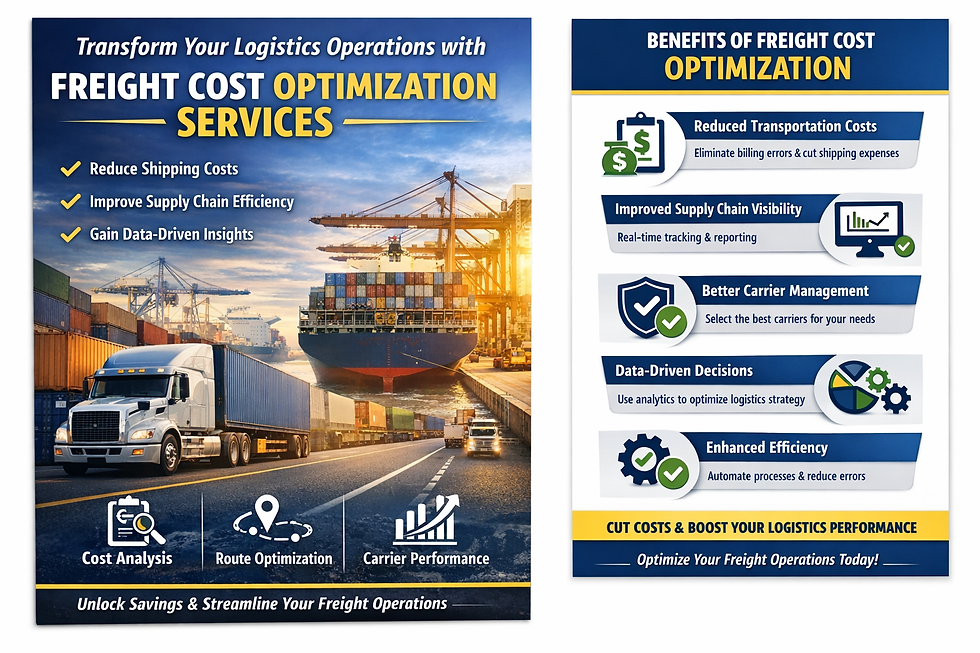
Freight audit services play a crucial role in ensuring financial accuracy and operational efficiency. By identifying billing errors, these services help businesses save money. They also streamline the payment process, allowing companies to focus on their core operations.
Benefits of Accurate Freight Audits
Accurate freight audits can significantly impact a company's bottom line. They help in:
Reducing unnecessary costs
Improving cash flow management
Enhancing supplier relationships
By investing in freight audit services, businesses can create a more efficient logistics operation.
Evolution of Freight Audit & Payment Services
Freight audit and payment practices have evolved significantly from early paper-based invoice processing and manual reconciliation. Historically, shippers and carriers relied on manual workflows and standardized payment timelines. As transportation networks expanded and pricing models became more complex, third-party freight audit providers emerged to manage invoice validation and payment processes.
Today, modern freight audit and payment solutions leverage automation, machine learning, and advanced supply chain analytics. These technologies validate carrier invoices, enforce contract compliance, and integrate seamlessly with Transportation Management Systems (TMS). They reduce errors, improve processing efficiency, and provide deeper visibility into transportation spend and carrier performance.
The Freight Audit & Payment Process
Modern freight audit and payment services typically include the following steps:
1. Invoice Capture
Carrier invoices are received electronically. They are captured via EDI, API, or TMS integration, ensuring timely and accurate data intake.
2. Pre-Audit Validation
Invoices are reviewed against contracted freight rates, shipment details, and service terms. This identifies duplicate charges, incorrect accessorials, and missing documentation.
3. Discrepancy Resolution
Billing discrepancies are resolved with carriers prior to payment approval. This ensures freight invoice accuracy and compliance.
4. Payment Authorization
Validated invoices are approved and processed for payment through electronic funds transfer or check.
5. Post-Audit Analysis
Audit data is analyzed to identify cost-saving opportunities, carrier performance trends, and transportation spend optimization insights.
Quantifying Freight Audit Savings and Value
Freight audit and payment services deliver measurable financial benefits:
Comprehensive freight invoice audits typically generate 2%–6% savings in total transportation costs.
In complex shipping environments with multiple carriers and transportation modes, freight overcharge recovery can exceed 5% of total freight spend.
For example, on a $50 million annual transportation budget, a conservative 3% recovery rate equates to $1.5 million in savings. Often, audit fees represent only a small fraction of recovered costs.
Choosing the Right Freight Audit & Payment Partner
When evaluating freight audit and payment service providers, organizations should consider:
Freight audit expertise and industry experience
Technology capabilities, including automation, analytics, and reporting
Scalability and integration flexibility
Customer support, governance, and responsiveness
Proven ROI, savings transparency, and reference case studies
An effective partner goes beyond invoice validation. They deliver actionable freight analytics, continuous improvement insights, and enhanced transportation spend visibility.
Conclusion
As supply chains expand and transportation costs continue to rise, freight audit and payment services have become mission-critical for organizations seeking cost control and billing accuracy. With continued market growth expected through 2030, companies that invest in robust freight invoice audit and payment solutions are better positioned to reduce costs. They can enforce contractual compliance and gain deeper insight into their transportation and supply chain spend.
Future Trends in Freight Audit and Payment
Looking ahead, several trends are shaping the future of freight audit and payment services. These trends include:
Increased Automation
Automation will continue to play a significant role in streamlining processes. This will reduce manual errors and improve efficiency.
Advanced Analytics
The use of advanced analytics will provide deeper insights into freight spending. Companies will be able to make data-driven decisions that enhance their logistics strategies.
Enhanced Compliance
As regulations evolve, companies will need to ensure compliance with new standards. Freight audit services will help organizations navigate these changes effectively.
By staying informed about these trends, businesses can adapt their logistics strategies and remain competitive in the market.
Conclusion
In summary, the freight audit and payment landscape is evolving rapidly. Companies that embrace these changes will not only save money but also improve their overall logistics operations. Investing in freight audit services is a strategic move that can lead to significant long-term benefits.


Comments